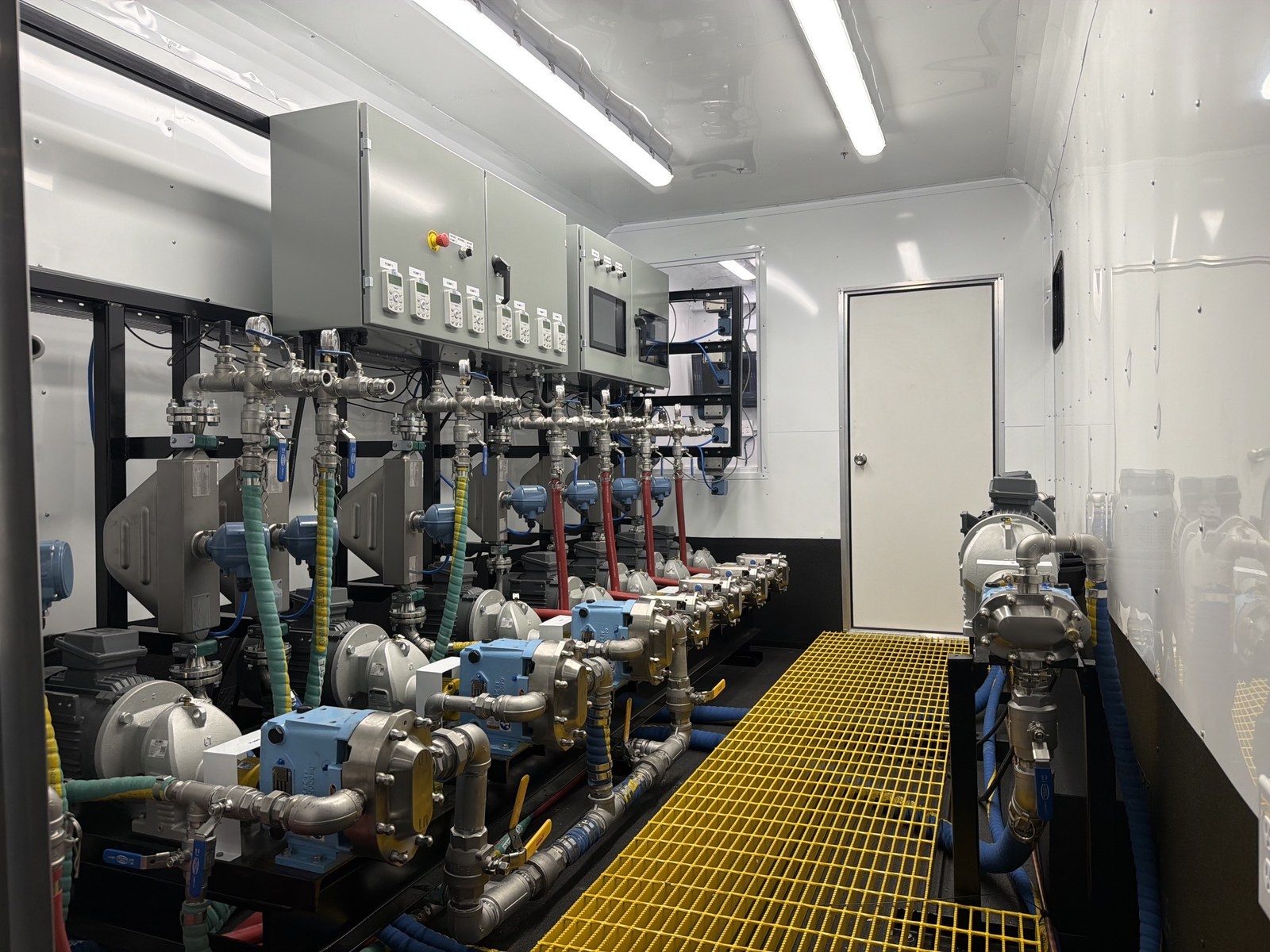
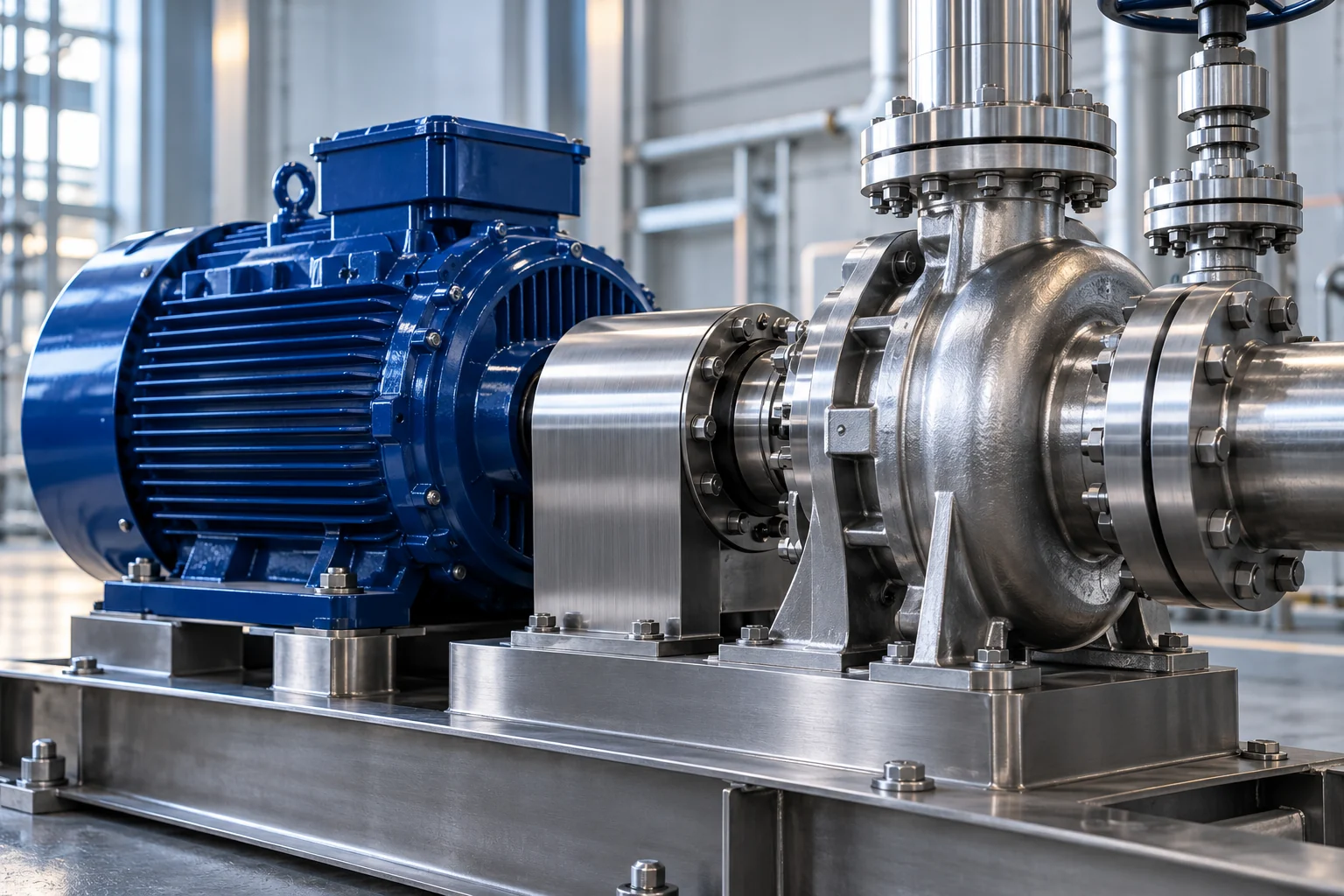
Matrix AI Box is in development with a target release in Q2 2027. Its planned role is to use wellsite data for predictive chemical-rate optimization, with optional autonomy and operator supervision. Current Chem Add Trailer operation uses operator-set rate control with manual backup.
The starting point: measured, operator-controlled addition.
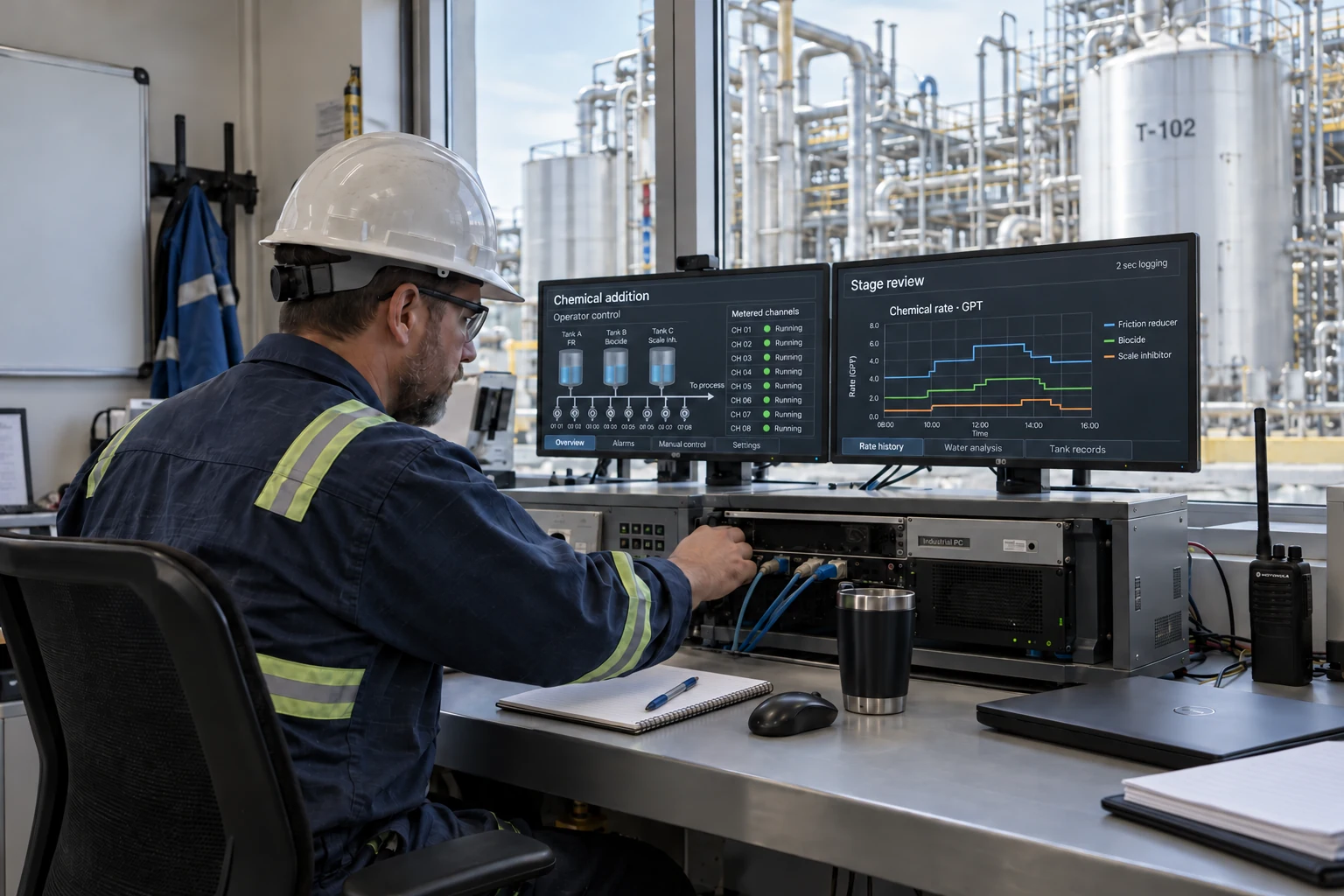
The current Chem Add Trailer combines chemical metering, rate control and a record of what happened during the stage. The operator sets the rate. The system holds that setting and documents chemical addition, with manual backup available. Eight Coriolis-metered channels support the program, with logging at two-second intervals.
That distinction matters when discussing artificial intelligence. Holding an operator's set rate is an existing control function. Deciding how that rate should change in response to wider operating conditions is the additional task Matrix AI Box is intended to address. The development program builds on the trailer's metering and data collection.
The measured foundation
- Coriolis-metered channels
- 8
- Data logging interval
- 2 sec
- Independent operating systems
- A / B
A rate history becomes more useful with operating context.
The trailer reporting package can include field tickets, stage reports, water analysis, tank records, chemical-rate graphs and CSV exports. These records offer different views of the operation. A rate graph shows how chemical addition varied over time. Water analysis describes the fluid environment. Stage records connect the chemical information with the treatment being reviewed.
Putting those records together starts with consistent units, timestamps and stage identifiers. A change in a chemical-rate trace is an observation that needs context before anyone assigns a cause. The water, chemical package, operator settings and timing of the treatment all help explain what the record means. A two-second logging interval describes the sampling frequency, rather than the speed or accuracy of a future AI decision.
Six views of the same stage
Products, quantities and invoicing.
Rates, volumes and stage details.
Water properties and chemistry.
Before- and after-stage volumes.
Chemical rate against pump rate.
Channel data for further analysis.
What Matrix AI Box is being developed to do.
Matrix AI Box is being developed to ingest multiple data streams from the location and provide predictive analysis for chemical-addition decisions. The intended application is real-time optimization of the chemical rate. Its planned computing approach places inference at the wellsite, where the system would analyze incoming data locally.
This creates a broader development objective than displaying a rate graph. The proposed system would relate chemical addition to other operating information and use that analysis to inform rate adjustments. The final inputs, model behavior, integration and operating configuration remain part of the development scope. The Q2 2027 target is a planned release window, not a statement that those capabilities are available today.
From field data to informed rate changes.
Field data
Multiple data streams from the location.
Local inference
Planned analysis at the wellsite.
Rate decisions
Predictive analysis intended to optimize chemical addition.
Chemical addition
Optional autonomy, with operator supervision.
Operator supervision remains part of the planned control approach.
Optional autonomy, with the operator supervising.
The development roadmap includes the option for the trailer to run the chemical program with the operator supervising rather than continually adjusting rates. Autonomy is intended to be optional. Current operation continues to use operator-set rate control with manual backup.
For a proposed deployment, the discussion should establish who can authorize adjustments, which operating limits apply and how the team returns to the agreed manual or operator-controlled mode. These are project questions to resolve with the operating team. They define the intended responsibility of the system and the people using it.
How the control role changes
Operator sets the rate.
The system maintains the chosen rate, logs metered addition and provides a manual backup.
Operator supervises.
Predictive optimization would inform rate changes, with autonomous operation available as an option.
Local analysis and remote access serve different purposes.
On-location inference describes where a future AI model would process data. Remote visibility and control describe how an authorized person accesses the trailer system. The current remote-access capability depends on connectivity, the configured system and customer permission.
A local computing approach does not by itself establish unrestricted remote access or compatibility with every data source on location. The proposed data connections, access permissions and reporting responsibilities need to fit the customer's site. Matrix can review those interfaces alongside the equipment and field-service scope.
Define the chemical-addition requirements.
A useful starting point is the decision the team wants to improve: what chemical rate is being managed, under which conditions, and what information would support a change? Bring the chemical package, rate requirements, water profile and available treatment records. Identify the data streams, reporting needs and operating responsibilities that would form part of the proposed system.
The existing trailer can be discussed around its current metering, controls and reporting. Matrix AI Box should be discussed as a development program, with the latest release status and final configuration confirmed for the project. Contact Matrix to connect that conversation with Chem Add Trailer equipment, Field Services or a wider Turnkey Services program.