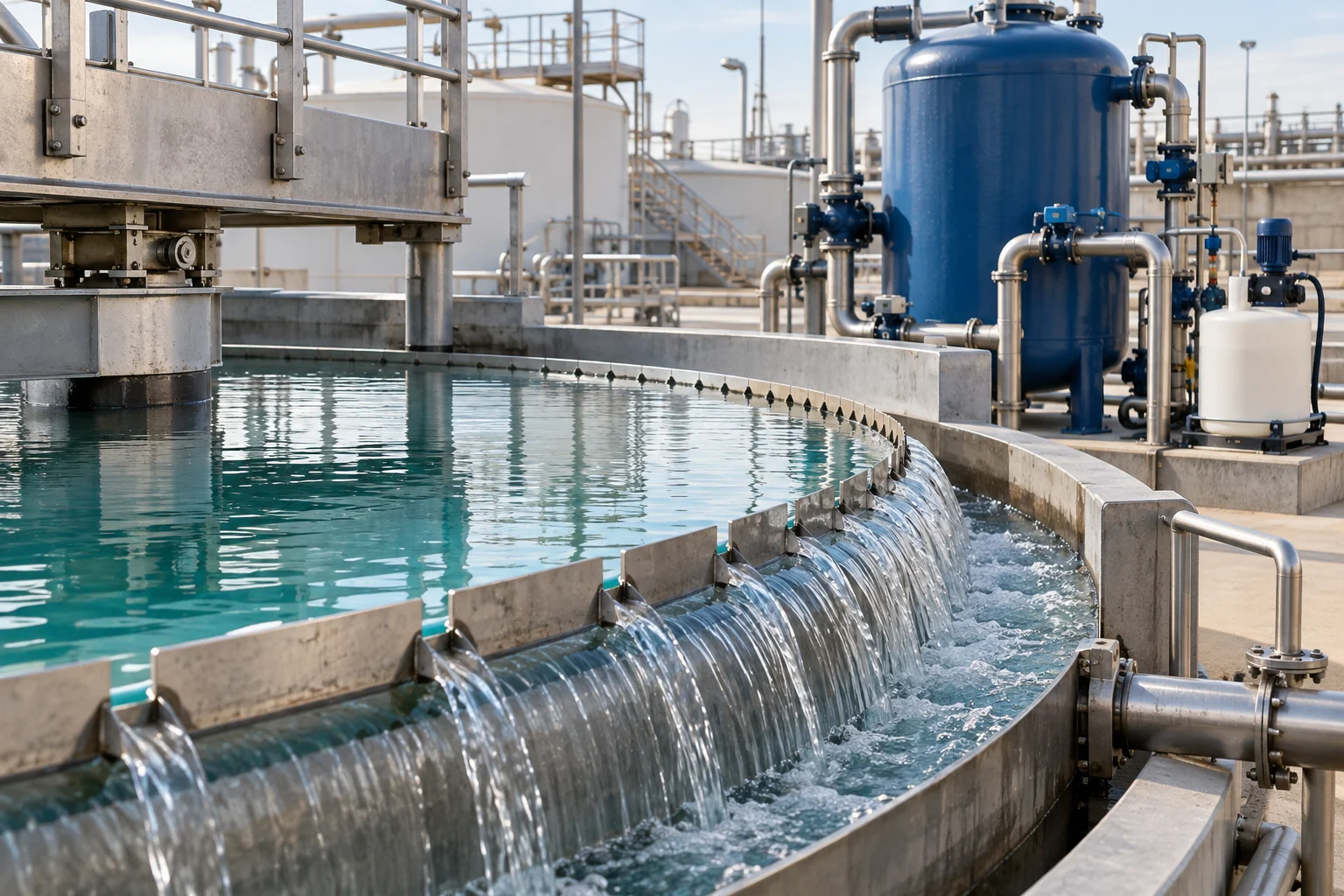
A friction reducer, scale inhibitor or biocide can behave differently once it meets the rest of the fluid program. A useful compatibility study reproduces the combination that matters in the field.
A single-product test answers a limited question.
Testing a product in representative water is a useful first comparison. It can show how that product behaves in the stated fluid and conditions. Once other additives are introduced, however, the fluid becomes a different system. A result for the isolated ingredient does not establish the response of the complete package.
For cationic FR systems, anionic scale inhibitors, surfactants and residual chemistry are important parts of the compatibility review. The practical lesson applies to how a study is designed: include the ingredients that will actually meet each other, rather than treating compatibility as a property of a product name.
Define the fluid before choosing the tests.
Begin with the water source, blend ratio and available analysis. Record existing treatment and any recycled-water history that could leave residual chemistry in the stream. If the water changes during the program, decide which conditions need to be represented.
Then list each planned additive, its intended concentration and its addition point. Identify which products are introduced together and which enter after a period of contact or mixing. A complete ingredient list without the sequence can still leave an important part of the field exposure unspecified. The study should reproduce the decision-relevant conditions as closely as its agreed scope allows.
Complete-package evaluation
Carry the actual water, additive sequence and operating conditions through the study.
- 01
Water
Source, blend and analysisDefine the fluid to be tested.
- 02
Package
Additives, concentration and sequenceTest the ingredients together.
- 03
Flow response
Hydration, friction and test baselineMeasure the required surface response.
- 04
Formation response
Mineralogy and relevant flow testingEvaluate rock interaction where required.
Evaluate the package step by step.
A structured review can move from water characterization to package screening, then to application performance and any formation-facing requirement. These stages answer different questions. Water analysis describes the starting fluid. A compatibility observation identifies visible or measured changes in the combination. A performance test asks whether the combination does the required job.
The visual beside this article is a test-planning map, not a pass/fail matrix for named products. No cell assigns a compatibility rating to a Matrix grade. A rating would require a specific formulation, concentration, water and test method. The map instead shows what information must remain attached to the result.
Appearance is an observation, not the whole decision.
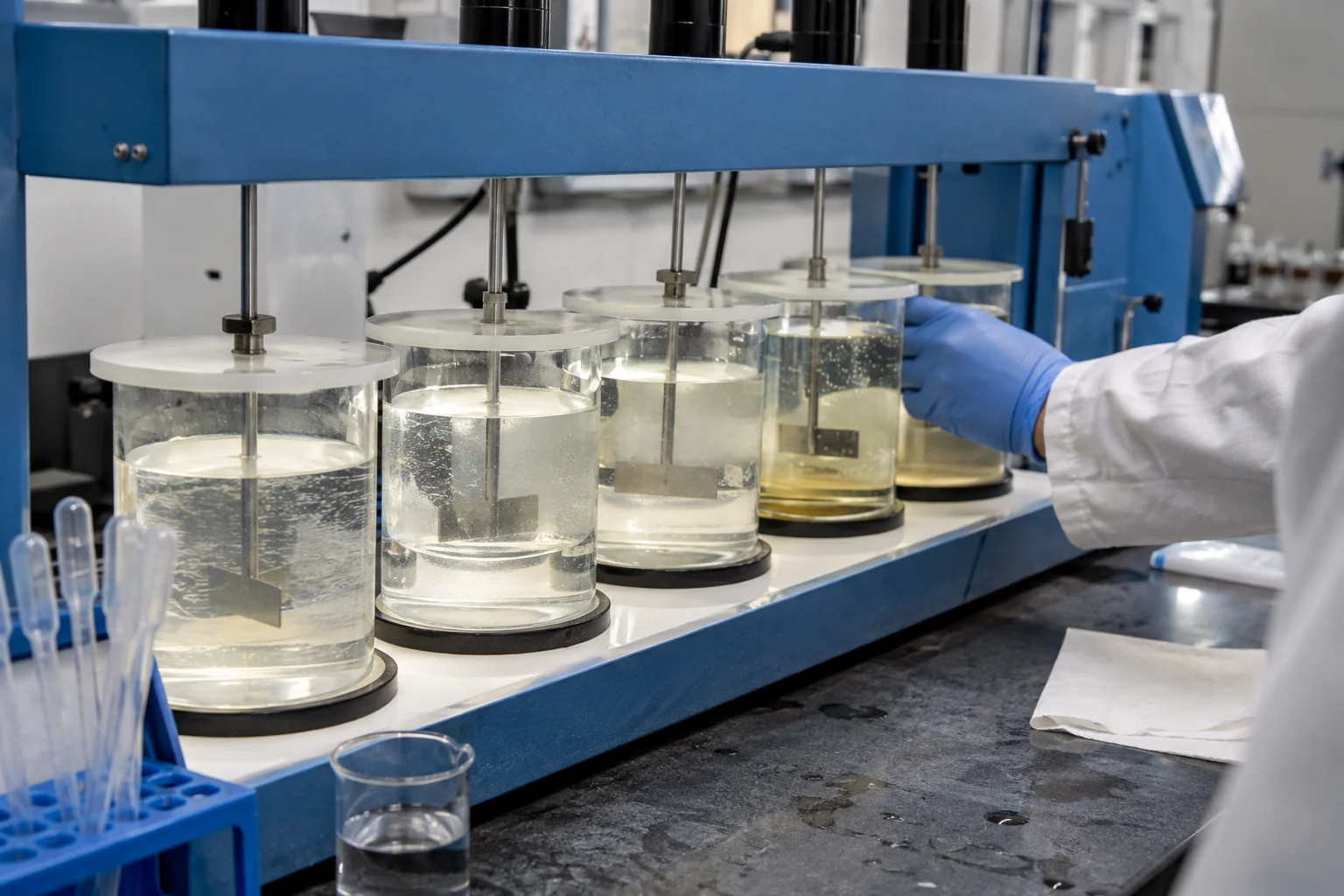
A jar review can reveal visible changes under the conditions used. Record the mixture, sequence, time and observations so another reviewer can understand what was compared. If the purpose includes a field-performance objective, the next test must address that objective directly.
A visually uniform fluid is not proof of friction reduction, scale inhibition or microbial-control efficacy. Likewise, a visible change needs interpretation before it can be translated into an operating conclusion. Keep the observation and the decision separate: what happened in the test, why it matters to the application, and what further evidence is needed.
Preserve the intended concentration and contact conditions.
Compatibility statements are easy to overextend when the test conditions disappear from the summary. Concentration, addition order and contact conditions should travel with the result. The relevant temperature and exposure period also need to be agreed for the question being investigated.
If a candidate package changes, the earlier result may no longer describe the new combination. Replacing one grade, increasing a dose or switching water sources can justify revisiting part of the evaluation. The aim is not to repeat every test automatically, but to identify which decision depended on the condition that changed.
Connect compatibility with performance.
Matrix laboratory studies cover friction-loop work, scale modeling and inhibitor evaluation, biocide efficacy, emulsion compatibility and water analysis. These are different evaluation tools. Selecting the appropriate combination depends on the application and the evidence needed to proceed.
For a stimulation package, useful questions may include how the FR hydrates and responds in the complete fluid, whether the scale-control program remains suitable, and how the intended microbial-control treatment is evaluated. Formation-facing concerns add another layer. A surface compatibility result does not replace an assessment of clay interaction or flow through representative material when those questions are material to the program.
Make the decision criteria explicit.
Before the study, agree what the results will be used to decide. Candidate selection, a formulation adjustment and a field-evaluation proposal can require different levels of evidence. Define the baseline and the observations that would prompt a change, further testing or a narrower operating envelope.
The final record should identify the sample, formulations, concentrations, methods and relevant conditions. It should also state limitations. A reader should be able to tell whether the conclusion applies to one tested water, an evaluated range or a question still awaiting additional work. That is more useful than a broad statement that two product families are compatible.
Review a changed package as a changed question.
Suppose the same FR is retained while the scale-control product or water source changes. The FR name has stayed the same, but the evaluated combination has not. Identify which earlier observations depended on the changed ingredient or fluid, and scope the additional comparison accordingly.
This is a way to manage evidence efficiently. A well-documented original study makes it possible to see which assumptions remain applicable and which need another check. Without that record, a broad compatibility statement can be repeated long after the actual package has changed. Keeping formulation identity, concentration, water and sequence attached to the result makes the technical handoff more precise and the next study easier to define.
Carry the result into the program.
The selected package needs to remain connected to manufacturing, supply and field application. Batch specifications, product identity, addition sequence and dosing requirements should reflect the evaluated program. Field observations and water changes should return to the technical review when they affect the original assumptions.
Bring Matrix the full additive list, water information, current issue and intended operating sequence. Include the question you want the laboratory work to answer and the date by which the next decision is needed. A complete brief makes it possible to scope a focused evaluation and to explain clearly what the eventual results support.