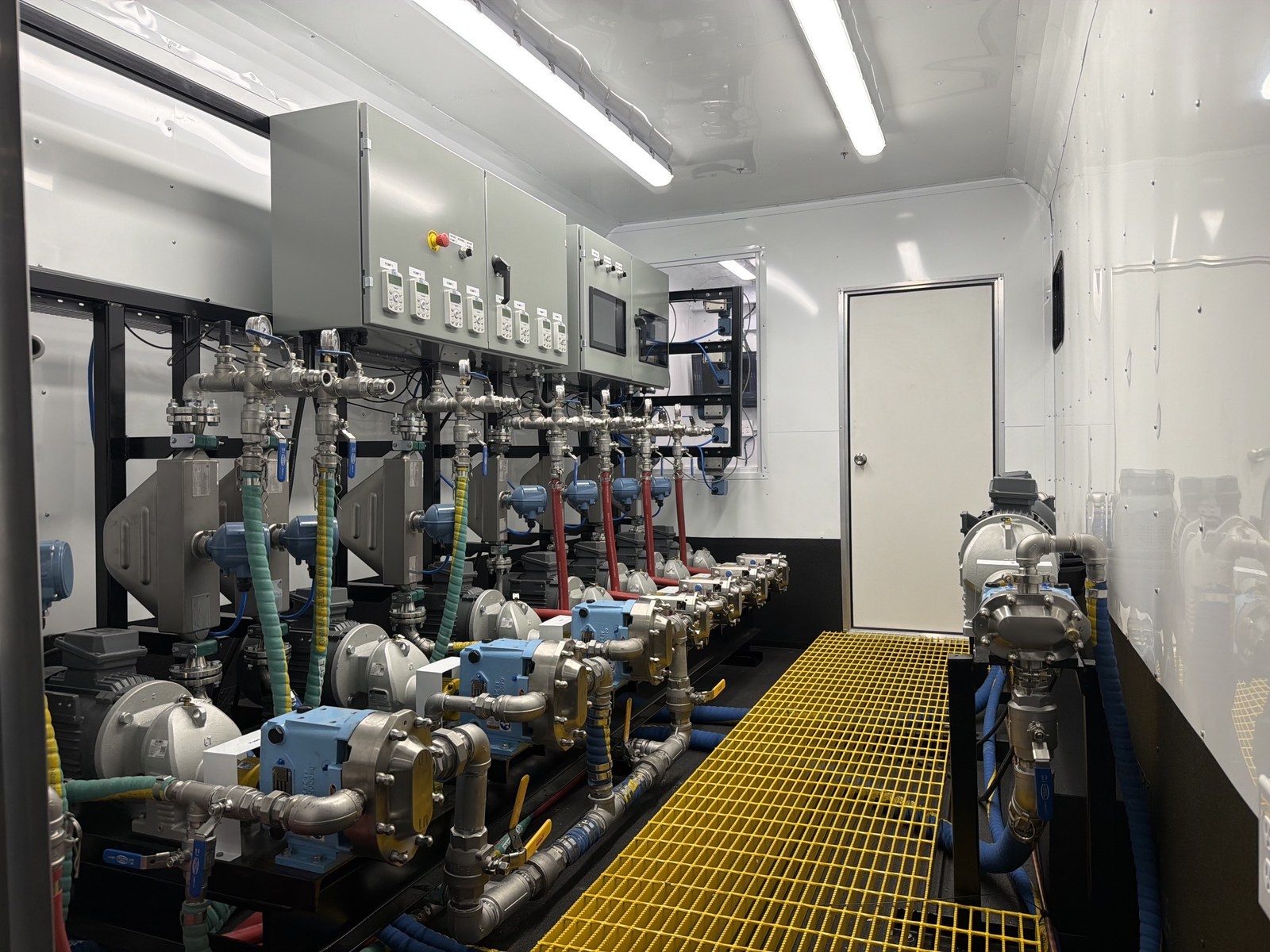
Redundancy is meaningful when the duplicated functions, shared hardware and operator recovery path are clear. The Matrix trailer provides a useful way to explain those distinctions.
Start with the function being protected.
A chemical-addition system brings storage, pumping, metering, controls and an operating interface together. Saying that the system has redundancy is only the beginning of the explanation. The useful question is which function has an alternative path, and what has to happen for that alternative to be used.
The Matrix Chem Add Trailer has independent A and B control systems with their own operator interfaces and communication paths, connected to a shared manifold. These details define the scope of the architecture more clearly than a statement that every part of the trailer is duplicated. Control redundancy and duplication of the entire physical flow path are different things.
Read the A and B architecture correctly.
Independent control systems can provide more than one route for operating the configured equipment. Each control path has a separate HMI and communication connection. The precise operating configuration and recovery procedure should be reviewed with the supplied equipment and the site team.
The diagram in this article is a functional explanation. It shows the A and B control paths and calls out the shared manifold boundary. It is not a wiring drawing, piping and instrumentation diagram or instruction for switching controls. Those project documents and procedures have a different purpose and need to match the actual configuration.
Trailer control architecture
Separate A and B control paths connect to eight metered chemical channels.
HMI A / COM A
HMI B / COM B
Selected control path
Eight metered channels
Shared manifold
Pre-plumbed spares, local VFD operation and hardwired emergency stop provide additional operating provisions.
Shared hardware still belongs in the review.
A shared component remains part of the operating system even when the controls have alternatives. The manifold, connections, chemical supply and other common dependencies must be understood within the site arrangement. A control-system diagram should not imply that each chemical channel has a completely independent duplicate flow path unless that is actually documented.
This is why the equipment brief should ask about the boundary of each function. What is independent, what is shared, and what conditions are required for an alternative mode? Answering those questions helps the customer assess the architecture without turning a design feature into a guarantee that no interruption can occur.
Spares and manual operation are separate provisions.
Pre-plumbed spares, local variable-frequency-drive operation and a hardwired emergency stop provide additional operating provisions. These provisions serve different roles from the A and B control arrangement. They should be discussed as distinct parts of the equipment and operating scope.
A spare is useful only within the applicable configuration and procedure. A manual operating path needs defined responsibilities and site procedures. An emergency stop is an emergency-control function, not a production-continuity feature. Use the equipment documentation and qualified site team to establish the applicable operating procedures.
Metering adds visibility to the system.
Eight chemical channels use Coriolis meters with a two-second logging interval. Metered records can support review of the chemical-rate history and the timing of operating changes. They do not, on their own, prove why a deviation occurred or establish performance under every fluid and operating condition.
The instrument configuration, calibration basis, fluid and report requirements should be part of the equipment discussion. A rate history becomes more useful when its timestamps and identifiers line up with the treatment record. That allows the customer and field team to review a specific event against the relevant operating context.
Remote access has its own dependencies.
Remote visibility and control depend on connectivity, the configured access and customer permissions. Local operation remains distinct from the connectivity and permissions required for remote access.
Agree who is authorized to view or operate the system and how responsibilities are handed over. The scope should reflect the actual site and customer requirements. A remote-capability statement does not establish unlimited access from every location, nor does it replace the local operating arrangement.
Keep present controls separate from future automation.
Matrix AI Box is in development, with a target release in Q2 2027. Autonomous optimization is part of that development program.
Current metering, logging and operator control should therefore be described on their own terms. They should not be presented as evidence that autonomous chemical optimization is already active. Any future automation proposal needs its own confirmed scope, configuration and release status before it is treated as a current equipment feature.
Define control and backup requirements.
A useful equipment inquiry identifies the chemical package, required channels, rate range, site connections, utilities and reporting needs. Add the customer's operating and remote-access requirements. Ask for the relevant configuration, documentation and responsibilities for normal operation and recovery.
The value of a redundancy explanation is clarity about the system. It helps the customer understand the alternative control paths, the shared components and the operating provisions that need to be scoped together. Matrix can connect that review with the Chem Add Trailer, equipment and field-service requirements for the proposed program.